
By Dr. Heba Anis
Used makeup: the real infection risk of beauty tools
I’m genuinely puzzled when I hear about girls buying used lipstick or anything that touches the skin directly! I can understand the idea for a pump or tube foundation — but a jar? No. Pumps and tubes never touch your hand and aren’t exposed to environmental problems.
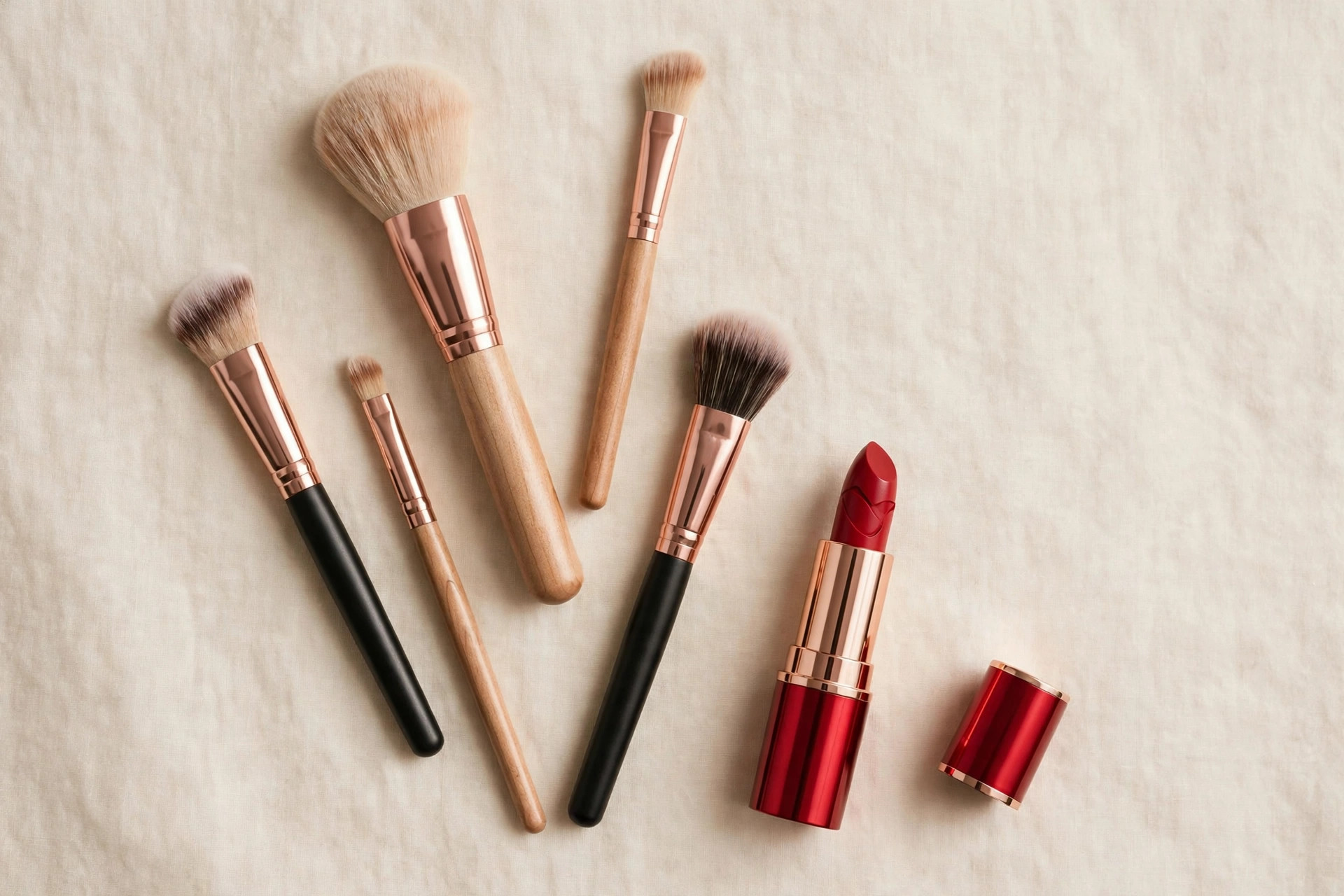
But lipstick, eyeshadow, and the rest of makeup — that’s risky. Even if you use a brush — what is the brush’s source? And how many girls actually sterilize their brushes regularly?
Your body has built up immunity to its own germs — but not to someone else’s. Those germs cause problems like breakouts or infections — and especially any kind of eye makeup: first, because the area is extremely sensitive, and second, because not everyone knows how to clean it properly.
Lip makeup, whether stick or brush: you can wash the brush — fine — but what about the germs that got inside the lipstick itself, which its owner’s body has adapted to, but yours hasn’t?
Powders or products with an application sponge: even if you sterilize the sponge, the powder itself has already absorbed the bacteria — unless you’re sure its owner never returned the leftover powder from the sponge back into the compact. And if the sponge is antibacterial, that’s for you and your own body — not for sharing with someone else.
As for products where you can remove the outer layer — like shaving off the top of a lipstick stick, or squeezing out the first bit of a pump cream — those can be used, but they’re not fully safe, because you still don’t know how the owner stored her products.
Brushes, blending sponges, and makeup tools shouldn’t just be washed — they must be thoroughly sterilized. And before you go to any beauty center, make sure they sterilize their tools after every single person, before touching your skin. Unfortunately, the same doesn’t apply to the makeup itself.
Of course, some will find this strange, because it happens every day — to the point that if you get a bacterial or fungal infection in your hair after using a hairbrush at a beauty center, or someone else’s — or makeup tools — you might not realize that’s the cause, especially if the symptoms appear later.
Specialists demand it be classified as an infection-transfer tool
Specialists around the world have demanded that makeup tools be classified as equally dangerous as disease-transmission tools like toothbrushes and razors — because their harm, though not well-known and not rare, is serious.
Real-life examples:
- An Australian woman contracted an antibiotic-resistant staphylococcus infection — and the damage unfortunately reached her spine; she now only moves in a wheelchair. And the cause was a makeup brush — not from a stranger, but from her own friend!
- A makeup artist named Steve Bauer says he used to use the same makeup brush on all his clients each day, as usual — until one day he discovered every single client had developed a severe eye infection the next day.
Famous diseases from shared makeup
- Staphylococcus: present in most people without clear symptoms — but unfortunately, its progression causes serious skin and body problems.
- Pink eye: an eye infection causing redness and pain.
- Cold sores: pimples or sores on the lips — a viral infection that can spread to anywhere on the body, and it’s painful.
Leave a Reply