
By Dr. Heba Anis
What’s the difference? Your guide to face toner types
First, let’s define what a toner is and what it does
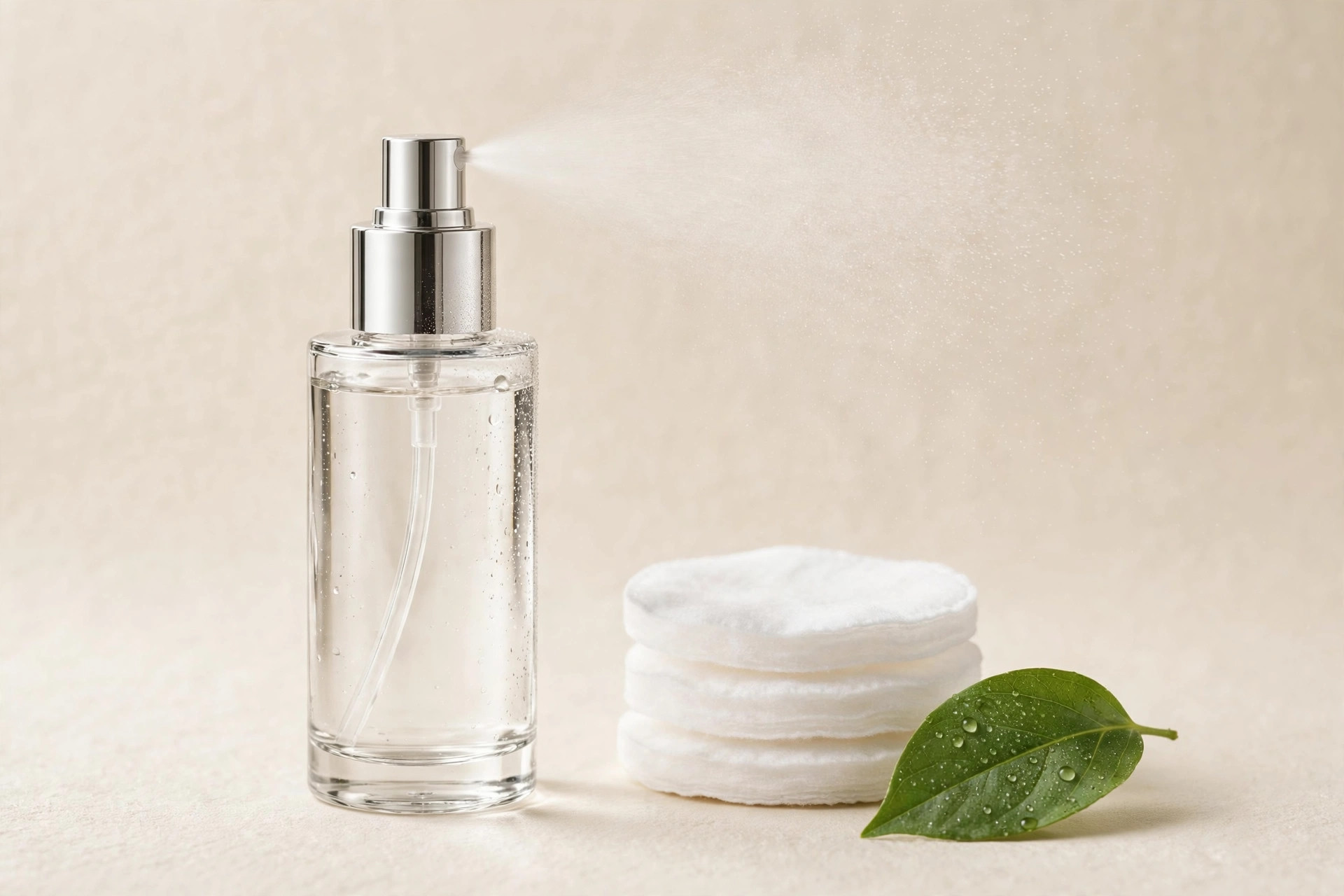
A toner: is of course a liquid — used after cleansing the skin, and it needs no rinsing. It has several benefits that depend mostly on your skin type and its ingredients. It can be a liquid, an emulsion, or pads.
It can be a core step in your routine — or unnecessary. The deciding factor is the type itself, the nature of the skin, the purpose — and especially whether the rest of the routine needs it:
- Dry skin: after cleansing, it needs a soothing, calming toner that restores moisture and water back to it.
- Oily skin: needs a toner after deep cleansing to rebalance oils and water, so the skin stays longer without producing more oil.
- Makeup-wearing skin: a toner helps by removing leftover makeup and preparing the skin for the treatments after it.
- Acne-prone skin: needs a toner that purifies and dries out pimples.
- Skin with heavy dead-cell buildup and keratin accumulation: a toner is important for it.
And so on — decide according to your skin’s nature, its needs, and the rest of your routine. Whatever the skin’s nature and condition, it may be unnecessary — but including it adds a big benefit for you.
How to use it
After cleansing and drying the skin — preferably applied with a cotton pad or cotton sheets, using light patting motions.
The different toner names
There are many names for toners — which is why I wanted to include them in the “What’s the difference” series. These many names can sometimes confuse you, and you might end up using more than one type thinking you’re benefiting your skin. Here are the names, in English, since that’s the common form:
Mist / Softener / astringent / tonic / toner / Skin Refiner / Skin balancer / Skin hydrator / lotion / skin / water / Skin Softer
The differences between them are subtle and lie in the base formula — but the function is the same. Each brand picks one of these names to describe its toner, and some brands use more than one name, distinguishing them by function and ingredients.
For example, alcohol is often added to toners for oily or acne-prone skin — and its concentration and type vary by name:
- Astringent has a higher alcohol concentration and is stronger.
- Tonic has a somewhat lower alcohol percentage than astringent.
Then comes toner — unfortunately, it’s hard to pin down the exact differences between them as names, because as I said, it depends on the ingredients, the intended function, and the formula.
My advice to you: if you’re adding toner to your core routine, choose based on your skin type and also the ingredients and the function written on it — whether it’s rebalancing oils or water, smoothing, firming, hydrating, or soothing.
Some of the types mentioned above have other benefits too — the mist, for example: there’s makeup mist, softening and moisturizing mist, and toner mist — the last being what’s meant here. The same example applies to some of the other names.
Warning: if you use a toner that’s wrong for your skin, you expose it to dryness, breakouts, or dullness.
Next time, God willing, we’ll cover serums, ampoules, and the types and differences.
With love and care.
Leave a Reply